

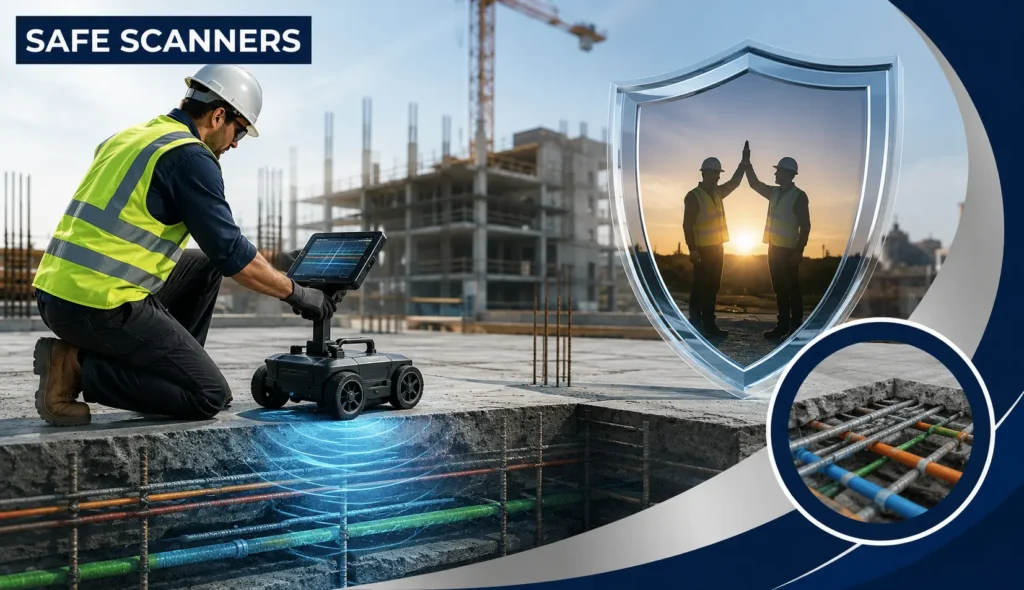
Construction sites are full of activity, but some of the most important details are hidden beneath the surface. Concrete slabs may contain electrical conduits, plumbing lines, reinforcing steel, or post-tension cables. Drilling, cutting, or coring without knowing where these elements are can lead to injuries, structural damage, expensive repairs, and major delays.
That is why GPR Scanning has become an important part of safer construction planning. Ground-penetrating radar helps teams identify possible objects and changes in materials inside or beneath concrete before work begins. With better information in hand, contractors across the United States can reduce avoidable risks and make more confident decisions in the field.
What Is GPR Concrete Scanning?
GPR Concrete Scanning is a non-destructive inspection process that uses radar signals to detect features below a concrete surface. A trained technician moves specialized equipment across the area being inspected. The collected data can help locate reinforcing steel, conduits, voids, post-tension cables, and other embedded items.
The process does not require the concrete to be broken open just to investigate what is inside. Instead, the scan provides a subsurface view that can help crews plan safe locations for core drilling, anchor installation, saw cutting, and other concrete modifications. The exact results depend on factors such as concrete thickness, moisture, reinforcement density, and site conditions, which is why professional interpretation is important.
Protecting Workers From Hidden Hazards
The greatest benefit of scanning is often the protection it provides to workers. Accidentally striking an energized electrical line can cause severe injury, equipment damage, or an unexpected shutdown. Hitting a post-tension cable can also create dangerous conditions and compromise the structural system.
A scan completed before work starts gives crews a clearer understanding of where hazards may be located. Marked results can then be used alongside project drawings, safety procedures, and the site supervisor’s instructions. This is a much safer approach than relying on assumptions or outdated plans.
GPR can also support Utility Locating before excavation or concrete removal. Identifying possible lines and obstructions early allows the team to adjust the work area, choose appropriate equipment, and coordinate with other trades before the task becomes urgent.
Preventing Costly Project Damage
A damaged utility or structural element can affect an entire construction schedule. Repairs may require emergency labor, replacement materials, engineering reviews, inspections, and coordination with building owners or utility providers. Even when the physical damage is limited, the resulting downtime can be costly.
Professional GPR Services help project teams reduce these surprises. By identifying likely obstructions before drilling or cutting, scanning allows contractors to move an opening, revise a method, or plan additional controls while changes are still manageable. The result is better preparation and less rework.
Improving Scheduling and Productivity
Construction projects depend on careful coordination. When an unexpected obstruction appears after a crew has mobilized, several activities may need to stop at once. A planned scan helps teams identify challenges earlier and organize the work around verified site conditions.
This makes Concrete Scanning useful during pre-task planning, renovation work, structural upgrades, and new installations. Crews can understand where work may proceed and where additional review is needed. That clarity helps reduce idle time and keeps labor, equipment, and materials moving more efficiently.
GPR Scanning and Concrete X-Ray Services
GPR is often preferred for concrete investigations because it is non-destructive and does not use ionizing radiation. Depending on the project, a scan may be completed with less disruption to occupants and nearby workers. However, GPR has limitations, and its effectiveness can vary with material conditions and the depth of the target.
Concrete X-Ray Services may be suitable for some applications that require a different type of imaging. X-ray work generally involves radiation-safety controls, restricted access, and more extensive site preparation. A qualified inspection provider can help determine whether GPR, X-ray, or a combination of methods is appropriate for the structure and scope of work. OSHA emphasizes the importance of identifying hazards and maintaining safe procedures during construction activities.
A Small Step With Significant Value
The cost of a scan is modest compared with the potential cost of an injury, structural repair, utility outage, or schedule disruption. More importantly, scanning supports a proactive safety culture. It encourages teams to investigate existing conditions before workers begin a task that could disturb concealed infrastructure.
For the best results, schedule scanning early enough to influence the work plan. Share available drawings and proposed penetration locations with the scanning team, and ensure the final markings or report are reviewed by the responsible contractor, engineer, or supervisor before work begins. GPR should support—not replace—professional judgment, safe work practices, and required utility-damage-prevention procedures.
GPR concrete scanning helps make construction work safer, more predictable, and more efficient. By revealing potential hazards before drilling, cutting, coring, or excavating, it protects workers, helps preserve structural systems, and reduces avoidable project costs.
Whether a project requires GPR Services, Utility Locating, or Concrete X-Ray Services, an experienced provider such as Safe Scanners can help teams select a suitable inspection approach. In the United States, one careful scan can prevent a major problem and help construction crews complete their work with greater confidence.